As far as summers in your life go, the one between middle school and high school is pivotal.
[MUSIC SIMILAR TO BLINK-182 BEGINS, BLINK 183?]
You’re not a kid anymore, but you’re definitely not a grown-up. Some kids start having sex or smoking, some kids haven’t even hit puberty. I was somewhere in between. I made friends by memorizing Adam Sandler songs and doing questionable Austin Powers impressions. I was in a confusing crush triangle with the two girls who lived up the hill, but my biggest concern was that Craig Kilborn had just been replaced as the host of The Daily Show by some guy named Jon Stewart.
It was 1999 in San Diego. We had bonfires, went to the X-Games. A band from our rival high school had just had their first big album. They were called Blink-182.
[MUSIC RAMPS UP, THEN FADES OUT]
[AMBIENT SOUNDS]
One Saturday morning, two weeks before summer break, I was playing baseball with my friends. My buddy Eric hit a line drive right at me.
SFX: Baseball bat hit
I ducked,
SFX: Whoosh
but not fast enough, and the ball hit me in the head.
SFX: Impact noise
SFX: High frequency sting
The pain was excruciating. All I could hear was ringing.
By coincidence, there was an ambulance taking a lunch break around the corner.
SFX: Ambulance siren
SFX: Flashlight “on” click
They shined a light in my eyes and determined I did not have a concussion, but just in case, said I shouldn’t fall asleep for 12 hours. That afternoon, head swollen and purple, I went with my family to a dinner at my siblings’ school.
One of the parents at that dinner happened to be a neurologist. She took a look at my head, said it was a really bad bruise, but probably nothing serious.
[AMBIENT SCHOOL NOISE]
SFX: Bell ring
At school Monday, I started having tunnel vision.
SFX: High frequency sting
[MUSIC COMES IN]
Something was wrong.
[AMBIENT HOSPITAL NOISE]
The school couldn’t get a hold of my parents, so my grandma took me to the emergency room. They ran some tests, told me I had a hematoma, and that I might need emergency brain surgery. I was terrified.
[MAGAZINE FLIPPING]
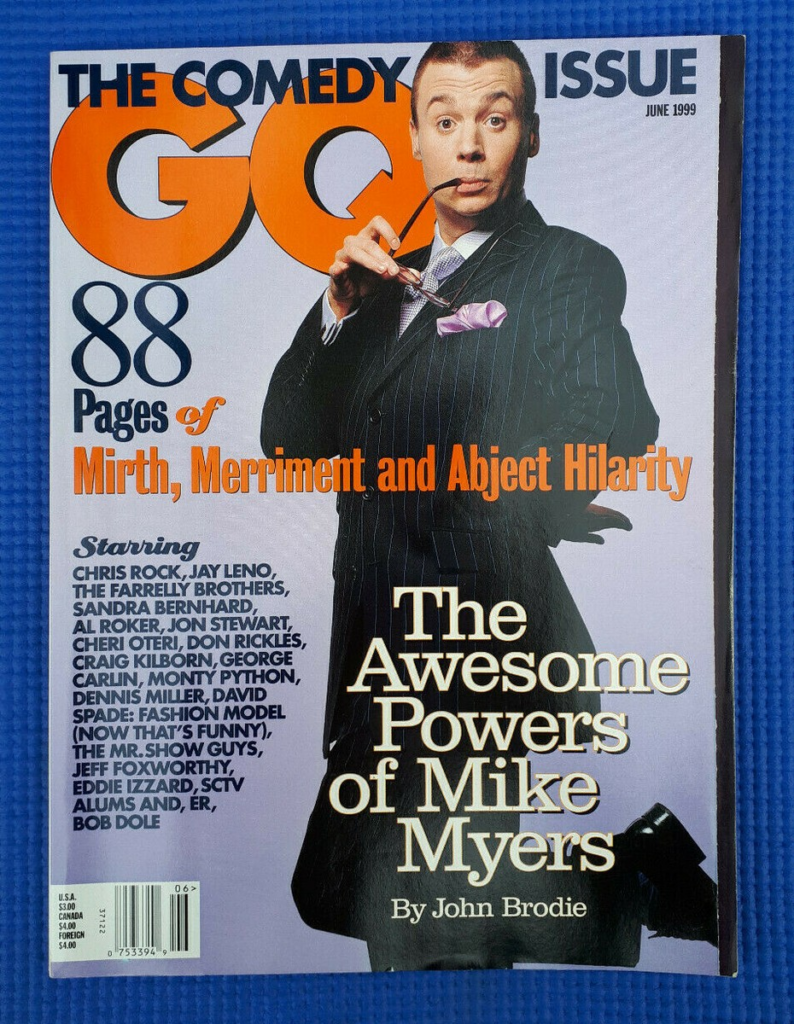
The only thing keeping my mind occupied was a GQ Magazine my mom brought when she arrived. It was a special comedy issue with Jon Stewart on the cover, and a pull out spread featuring the “100 best jokes of all time.”
After a while, a different doctor came to show me my CT scan, and told me I’d been extremely lucky — I had a blood clot the size of a baseball in my brain and if I’d been hit a millimeter forward or backward, I’d have been blind or deaf. And a millimeter higher or lower I might’ve been in a coma.
Then, to my surprise, they said the best course of action was to go home.
[MUSIC FADES OUT]
I never had another follow-up.
[MUSIC COMES IN]
I spent the rest of the summer in bed. The pain was so bad I had vertigo and ringing in my ears,
SFX: High frequency sting
And if I lifted my head off my pillow,
SFX: Heartbeat
it would pound and the room would spin. I missed the 8th-grade dance. I missed graduation. Someone had to pick up my yearbook and get it signed for me. The two girls I had a crush on would come knock at the door and see if I could go rollerblading at the lake. I would listen to my parents say “no, he’s not feeling well,” and then I’d watch them rollerblade away out the front window.
That summer was awful. I spent the whole summer thinking I’d never be the same again. Then, every week the pain got a little better, and by the time freshman year started,
[MUSIC FADES OUT]
[AMBIENT SCHOOL NOISE]
SFX: Bell ring
I was basically back to normal.
[MUSIC COMES IN]
But I always had these lingering fears that something was just, I don’t know, dormant. What if the injury caused something worse? Like when there’s a crack in the sidewalk and a weed starts growing through.
That’s why, two and a half decades later, this article stopped me in my tracks.
[MUSIC PAUSES]
JACOB: “Ivy tech graduate Jacob Reed faces brain injury, challenges adversity”
[MUSIC RESUMES]
It was a story about another Jacob Reed who had a brain tumor in his left temporal lobe. It was discovered the summer before high school.
Same time in his life. Same part of his brain. Same name.
[MUSIC OUT]
[THEME MUSIC IN]
[RINGING]
I didn’t know what to make of all of this, but I knew I had to talk to him.
CLIP MONTAGE:
PAMELA: We no longer have those records.
DALE: We’re waiting for people to show up. And no one ever showed up.
MOM: I remember them saying that your brain would absorb it over time.
JACOB: How do I know that this happened to me the way that I think it happened to me?
ALEX: Now, you’ve asked the question that got me into neuroscience in the first place.
JACOB 79: I was terminated three days after I had gave him that documentation.
DIVAKAR: Something that appears mild could actually be more severe. They’re not a joke.
[INTRO / THEME SONG]
SHOW OPEN: Welcome to Jacob Reed and me / and me / Jacob Reed and me / Jacob Reed and me / and me / and me / a docuseries / a mystery show / a rabbit hole / a mundane multiverse / an investigative comedy / that answers life’s biggest questions / life’s biggest questions / exclusively by tracking down people / tracking down people / named Jacob Reed / Jacob Reed / Jacob Reed / Jacob Reed / hosted by me: Jacob Reed.
Today on the show: Number 79 on my spreadsheet: The Head Case.
[THEME MUSIC OUT]
ACT 1: WHO IS JACOB REED
I’d found an article about another Jacob Reed in an Indiana newspaper.
[MUSIC COMES IN]
JACOB: Just before starting high school, Reed was an honor student who worked hard to achieve academic success. Because of those high academic achievements leading up through eighth grade, he was placed into three advanced classes for his freshman year of high school.
JACOB: The summer before high school, Reed began having seizures leading to the discovery of a brain tumor in his left temporal lobe.
[MUSIC OUT]
Jacob was a decade or so younger than me, but the coincidences were staggering. Both honor students, summer before high school, left temporal lobe… and the more I read about him, the more I found we had in common.
JACOB: Holy shit, he also does improv! Paddle boarding. Yeah. Wind sailing. Yes. And baking in his free time. I love baking.
With all the things we had in common, the craziest thing was where our paths diverted.
[MUSIC COMES IN]
I was afraid of having a tumor. He actually had one. I spent hours thinking I might have brain surgery. He lived through it.
And something else happened after I discovered this Jacob Reed.
I started talking to friends and family about my head injury for the first time in decades, and there was something about the way they reacted that alarmed me.
CLIP MONTAGE:
JACOB: Do you remember when I got hit in the head with a baseball?
JOEL: No, like I don’t remember that.
EVAN: I thought it was from a lacrosse ball.
JOEL: Did it affect how much we hung out?
MOM: I don’t remember that part.
This was one of the defining events in my adolescence and nobody in my life seemed to remember it being a big deal.
[MUSIC STOPS]
Was this injury as serious as I remembered it? Or was it what everyone else remembered: a passing event that had no effect on me at all?
[MUSIC COMES IN]
Whatever happened to me, it was crystal clear that what happened to Jacob Reed was a big deal. He had seizures. He had cognitive difficulties. He actually had brain surgery.
JACOB: “The tumor was removed successfully, but its end marked only the beginning of Reed’s challenging journey. Post surgery, Reed’s brain was left in an injured state and once simple tasks such as recalling and retaining information became a challenge.”
I thought if I could find him and hear his story, maybe I’d have a better understanding of what happened to me.
I looked for him on Facebook and Instagram, but I didn’t find anything. I sent him a message on LinkedIn, but it wasn’t clear if he used his account there. While I waited, I tried to get in touch with the author of the college newspaper article where I’d found out about him… but after a little back and forth she asked me what I wanted to know…
[MUSIC ENDS]
And, you know, I really didn’t have a clear answer. I just said, “I feel like I should talk to him.” Which, in retrospect is a very creepy thing to say about someone you found on the internet.
[MUSIC STARTS AGAIN]
And… she stopped replying.
[MUSIC OUT]
But before I kept looking for Jacob Reed, I had some homework to do. After all, how could Jacob and I compare notes if all I had were my memories? I set out to find my medical records from 1999.
[RINGING]
AUTOMATED VOICE: Thank you for calling the Kaiser Permanente Release of Information Department. All of our representatives are currently assisting other members. Please stay on the line…
[HOLD MUSIC]
After five minutes of this song on loop, my morning coffee started kicking in…
JACOB: Um, I have to go pee really bad. So, if they don’t pick up soon I might just have to go pee.
[HOLD MUSIC CONTINUES]
JACOB: You think I should chance it?
JACOB: I’m gonna chance it.
[FOOTSTEPS, DOOR OPENS AND SHUTS]
[BATHROOM NOISES]
[HOLD MUSIC STOPS]
[RINGING]
[DOOR SLAMS]
[FOOTSTEPS]
JACOB: Shit. Shit shit shit shit shit. [clears throat] Hello?
PAMELA: Medical records, Pamela speaking.
JACOB: Hey Pamela. How’s your day going so far?
PAMELA: Busy.
JACOB: Busy. Ugh.
PAMELA: May I have your medical record number?
JACOB: So, I have not been with Kaiser for like, a decade. So I don’t know my medical–
PAMELA: Um, I could check uhhh, or look you up by your date of birth.
I gave her the info and she told me….
PAMELA: We are able to send medical records from 2007 to present.
JACOB: Okay. So if I want records from back in 1999, how would I get those?
PAMELA: We no longer have those records.
JACOB: They’ve been…
PAMELA: Purged. Yes.
JACOB: Could I just get everything you guys have on me?
PAMELA: Sure. It should be there within 72 business hours.
JACOB: Okay, cool.
PAMELA: Well, thank you sir, and enjoy the rest of your day.
JACOB: Thank you. You too.
[CALL END SOUND]
JACOB: Wow. I really timed that pee.
While my quick pee had been very successful, records from 2007 to present wouldn’t help me get any info on an injury from 1999.
[MUSIC COMES IN]
I guess it was something? And while I waited for 72 business hours to pass, I kept looking for Jacob Reed.
I searched the Internet for the Indiana town where he was from, plus “improv”, which got me to a half finished website for an improv group. It had placeholder text for bios, stock photos for images. The only person with a full bio and photo was Jacob. Had he been the one roped into making the website for his improv team? Because… same.
The website said they performed at East West Studios, who I emailed, but didn’t hear back from. And when I looked up their phone number, I got this business:
[RINGING]
[MUSIC STOPS]
AUTOMATED VOICE: Thank you for calling East Wind Acupuncture, If you’ve reached…
So East West Studios was also East Wind Acupuncture?
[MUSIC RESUMES]
I’ve done improv a lot of unusual places, but never in an acupuncture studio. I left them a message…
I called a few times over the next couple weeks. Then, I started calling other businesses in the same strip mall to see if they knew anything about the improv theater slash acupuncture studio.
There was a hair salon, a bank, and a music store.
BEAUTY BY ALLIE: Thank you for calling Beauty by Allie.
JACOB: Are you guys in the same plaza as the, uh, East West?
BEAUTY BY ALLIE: East Wind studios?
[MUSIC FADES OUT]
JACOB: Yes, thank you, there’s an improv place that’s near East Wind studios or in East Wind studios.
BEAUTY BY ALLIE: I don’t know anything about it, but I am in the middle of a workday so I do have to get off the line.
JACOB: No worries, I appreciate—
[CALL END NOISE]
[MUSIC RESUMES]
I started to dial the bank… then I imagined the kind of lists I might end up on if I started asking a bank for intel on the businesses around it, and I skipped to the music store.
JACOB: Is this the music shop?
DALE: Yeah.
JACOB: This is super weird, um, so first of all… [FADES OUT]
I explained the search–right down to the coincidences about improv and brain injuries.
DALE: That is nutty. I actually tried to attend one of their shows once. There was no audience. And they’re like, “well, we’re waiting for people to show up.” And no one ever showed up.
I’ve been there.
[MUSIC FADES OUT]
DALE: There’s a girl there named Melissa that booked that comedy group.
JACOB: No one’s picking up the phone number. Do you know of any other way to get in touch with Melissa?
DALE: No, I don’t have her number. I just see her on the sidewalk occasionally.
I didn’t have the time or the money to go to a sidewalk in Indiana and ask every woman passing by if she was Melissa. But, however many days 72 business hours was, I guess had passed, because I had gotten my records from Kaiser.
[MUSIC COMES IN]
It was 59 pages long. Every urgent care, specialist, and other doctor I’d seen between 2007 and 2012. The furthest back I could get.
OVERLAPPING CLIP MONTAGE:
JACOB: Oh three oh four 2009 –
JACOB: Unspecified anxiety disorder –
JACOB: Back ache in 2008. Scoliosis –
JACOB: Wisdom teeth –
JACOB: Sexually active? Yes. 2010. Was that true? –
JACOB: Foreign body in left thumbnail –
JACOB: Doctor misspelled Xanax –
JACOB: Does admit to a history of anxiety –
JACOB: Reports a fullness in his testicles –
Wow, I have no recollection of whatever that testicle thing is.
JACOB: Finger pain. 2010 –
JACOB: We’re on page 9 of 59.
There wasn’t anything specifically about the brain injury… but looking back at some of the doctor’s notes for each visit, I noticed a pattern…
CLIP MONTAGE:
JACOB: Contusion –
JACOB: Contusion varis –
JACOB: Contusion –
JACOB: Contusion –
JACOB: Contusion –
JACOB: Contusion –
JACOB: Contusion. Young age, resolved.
My recollection was that I hadn’t talked about this injury since it happened.
[MUSIC STOPS]
But the records told a different story: a decade later, I was still bringing it up with every doctor I saw.
Why did I think a doctor who was going to give me a tetanus shot needed to know I had a brain injury when I was fourteen? Like, I didn’t get enough answers when it happened, so I was baiting each doctor afterward into re-opening the diagnosis, and ordering new tests in case they might discover something everyone else had missed?
I needed to get records from before 2007, which meant I needed to go to someone who doesn’t purge records…
JACOB: Can you hear me?
MOM: You just called from this number before, right?
JACOB: Yeah.
MOM: But, I said hello then and you didn’t hear me.
My Mom.
[MUSIC COMES IN]
MOM: So I’m in the four drawer cabinet in the garage. You gotta look at this. It’s like going down memory lane.
Even if my mom didn’t remember this being a big deal, she still would have kept the records – ‘cause she keeps everything.
OVERLAPPING CLIP MONTAGE:
MOM: Allergy and asthma, an old bank statement –
MOM: Classes, report cards –
MOM: Got everything from uh, your first gumball machine that you drew to your braces.
MOM: You got a bar mitzvah with honors. –
JACOB: [laughs] Should I put that on my resume? –
MOM: One of your first business cards, Jacob. The Bald Eagle Detective Agency. –
MOM: You could see you were an artist. –
Moms are gonna mom.
[MUSIC STOPS]
I tried to get mine on track…
MOM: There’s something about once when you’re on amoxicillin.
JACOB: Does that mean that you’re getting close to–like the medical stuff would be in the same place?
MOM: I remember right when it happened, didn’t we take you to Kaiser and they said it was a contusion…
I remember the accident happening on a Saturday and going to the hospital on a Monday. My mom thinks she took me to the hospital right away. Not only that, I don’t think she was the one who took me.
JACOB: For some reason you couldn’t get there. And dad couldn’t get there. And so grandma came and picked me up and took me to the emergency room. And they thought maybe I had to have brain surgery.
MOM: Ah! I don’t remember that part.
JACOB: Do you remember I couldn’t eat anything because they didn’t want me to eat anything in case they had to rush me into surgery.
MOM: Oh my gosh.
[Overlapping] JACOB: You don’t remember any of this?
MOM: I just remember them saying it was, uh, is the word a hematoma? Where it’s like–
[Overlapping] JACOB: Yeah.
MOM: Yeah, I remember them saying it’s that and that your brain would absorb it over time. The extra blood.
[Overlapping] JACOB: Right.
MOM: And that’s all I remember, so…
JACOB: I was like, basically in bed for that whole summer.
MOM: Are you sure about that? I thought you went to camp or something.
JACOB: You thought I spent that summer at camp?! [laughs]
MOM: I just feel like the way I keep things, if I had a report like that, I probably would have kept it.
JACOB: Okay.
MOM: But it sounds like I, I have serious head trauma. [laughing]
MOM: The stuff I keep.
[MUSIC COMES IN]
My mom and I remembered this completely differently. I was sure I’d spent the whole summer in bed – she swore I went to camp. Those aren’t just different details – they’re different summers.
If I misremembered staying in bed for three months, what else had I gotten wrong? Eric hitting the line drive into my temple? The GQ comedy issue with Jon Stewart on the cover? The blood clot the size of a baseball? Had I built this story out of half-memories and assumptions playing a game of telephone with myself since I was fourteen?
At first, I was looking for my medical records to have a more informed conversation with Jacob Reed. But now I felt like I needed to find them to prove I wasn’t crazy. I drove to the emergency room in San Diego. I found the address for where Kaiser’s medical records were archived. I even looked up names of neurosurgeons who were with Kaiser in 1999.
[MUSIC FADES OUT]
None of it panned out.
Since I couldn’t investigate records, I decided to investigate my actual memories. It just so happens that one of our producers, Alex, is a neuroscientist.
ALEX: I did a, a PhD at MIT. I did a postdoc. I genetically engineered mice to turn off and on very specific parts of the brain so I could study memory formation and acquisition and recall. You know, worked in the lab of a Nobel laureate. Published in top science journals on the planet. Science, nature, neuroscience and [unintelligible]… [FADES OUT]
Yeah, but did he get a Bar Mitzvah with honors?
JACOB: I don’t know if I am remembering this correctly or if I have started telling myself a story about what happened that has become a thing I repeat.
JACOB: How do I know that my memory is–
ALEX: You don’t.
JACOB: Real.
[MUSIC COMES IN]
ALEX: [laughs] You don’t. Th–the whole point of this, is that memory is such a fickle, finicky thing. We think that memories are robust and we define ourselves based on those memories because we think they’re so robust.
[MUSIC ENDS]
ALEX: But memories are really tidbits and threads that we hold onto and then kind of repaint the picture.
[WHOOSH]
ECHOEY FLASHBACK MONTAGE:
JACOB: They ran some tests. Tests.
JACOB: Told me I had a hematoma. Hematoma… [pitches down]
JACOB: And that I might need emergency brain surgery. Brain surgery…
[WHOOSH]
[MUSIC COMES IN]
ALEX: If I tell you to remember the day that happened and today, you were just angry at somebody, right? You’re bringing that anger into this memory that’s being resurfaced and you will start to reprocess that memory.
ALEX: You’re actively adding elements to it every time you bring it up. And if someone tells you something that feels right and you start saying it, then every time you say it, it becomes embedded in the representation of that memory.
JACOB: So how do I know that this happened to me the way that I think it happened to me?
ALEX: Now, you’ve asked the question that got me into neuroscience in the first place.
[MUSIC FADES OUT]
After months of searching for Jacob Reed, I went back to nudge my LinkedIn message and saw he actually replied the same day. I just hadn’t seen it.
[MUSIC COMES IN]
I’d called dozens of businesses, emailed writers and improv groups, gone on a wild goose chase for my own medical records, and he messaged me his number an hour and four minutes after I started my search. All I had to show for the last two months was a complete lack of trust in my own memory.
After the break, Jacob and I go head to head.
[MUSIC OUT]
ACT 2
I had spent months looking for the other brain injury Jacob, and it turns out I had just missed his message. But now I had his number, and I was finally going to talk to him.
[RINGING]
JACOB 79: [cutting in/out] Hello, this is Jacob.
[MUSIC COMES IN]
JACOB: Hey, Jacob. This is also Jacob. How’s it going?
JACOB 79: [cutting in/out] Oh, hi. How are you?
Our connection was bad, but I really wanted to talk to him.
JACOB: I read this article and I had a brain injury in the exact same place. I thought that was fascinating because we also have the same name.
JACOB 79: Yeah, that is fascinating.
JACOB: The article mentioned that you do improv. And I do improv.
JACOB 79: Oh, interesting. There’s so many similarities..
JACOB: The other crazy thing [laughs], are you, I don’t know if you’re ready for this,
[MUSIC FADES OUT]
JACOB: But, I had my brain injury right at the end of eighth grade in the summer between eighth grade and freshman year of high school. When did you find out you had a tumor?
JACOB 79: [laughs] The same time going into high school.
[MUSIC COMES IN]
JACOB: How does this make you feel? Because it makes me feel, I don’t even know.
JACOB 79: Uh, it’s pretty interesting, unless you’re just making it all up, I don’t know, but. [laughs]
JACOB: [laughs] Do you think I’m making it up?
JACOB 79: Um, like 50/50.
JACOB: Okay. Well, so [Jacobs laugh] that’s a totally fair reply. Obviously, today I just called you out of the blue. I can, um, I’ve been trying to track down… [FADES OUT]
To prove my legitimacy, I offered to show Jacob all 59 pages of medical records where I kept mentioning my brain injury. That might not prove it wasn’t a scam, but it would at least prove that if it was, it was a very long con.
[MUSIC OUT]
JACOB 79: So you’re creating a podcast then for all this?
JACOB: Yeah, so the podcast is… [FADES OUT]
I explained the entire podcast. All the Jacobs, blah, blah, blah. And with that, the floodgates opened. Jacob went from thinking he might be getting scammed, to sharing everything.
JACOB 79: You go through a lot of trauma with it and people just don’t understand or they don’t get it.
[MUSIC COMES IN]
JACOB 79: Yeah, I’m very smart. I have an engineering degree, but I also have cognitive limitations.
JACOB 79: You know, years later after my surgery and getting fired because of being disabled and lack of understanding and empathy.
JACOB: What you’re describing just seems really scary and frustrating and um…difficult. So I’m sorry that you’re going through that.
JACOB 79: I appreciate that.
It was clear we had a lot to talk about, so we set up a time for a longer conversation.
[MUSIC ENDS]
I found a studio near Jacob to get better audio quality, but they weren’t ready when he arrived, so I called him to pass the time.
JACOB 79: Hey, Jacob Reed. What’s up?
[Overlapping] JACOB: Hey, Jacob Reed, how are you? [laughs]
JACOB 79: Good. I’m gonna be starting a new job tomorrow, so I went there to know where I was going. Went for a nice walk in the park and then made some, uh, coconut shrimp.
JACOB: Like from scratch, coconut shrimp?
JACOB 79: Yeah.
When the studio was ready, we got into the pressing issues… like the differences between the improv scene in Indiana and Los Angeles.
JACOB 79: So I’ve been performing for about six years, maybe now.
JACOB 79: We do, uh short form improv games. We actually got a pastor in our group. We got a retired guy that used to do a lot of like stuff with the news. A realtor, a computer programmer guy.
JACOB: Are any of them doing improv as a way to get on a TV show?
JACOB 79: I don’t think, we just do it for fun.
JACOB: I love that. Do the people you do improv with know about your cognitive disabilities?
JACOB 79: I haven’t really said anything too much about it, but I think one person in the group’s kind of told ’em all. So they probably know.
Classic improv gossip.
I asked Jacob to retell his brain story.
[MUSIC COMES IN]
JACOB 79: So as the summer going into high school, I was having seizures.
[OUTDOOR AMBIENT SOUNDS / BUG NOISE ]
JACOB 79: Basically I was working hard on a farm, painting some fences. I went home after half a day, really exhausted, really hot from the summer day. And I had a glass of water in my hand and I just dropped it all of a sudden,
SFX: Impact sound
SFX: Bass sting
SFX: Glass shatter
JACOB 79: Was completely unconscious, having a seizure.
JACOB 79: And then from there we had an MRI done, it was discovered I had a brain tumor in the left temporal lobe.
JACOB: Was that experience scary for you?
JACOB 79: I wasn’t really too worried about it. I guess what was going through my head is I’m gonna have surgery and then I’m gonna go back to being normal, which [laughs] was the opposite of that.
[MUSIC OUT]
[NEW MUSIC IN]
When I had my injury, I worried I’d never go back to normal. Jacob was certain he’d have his surgery and everything would be fine. What he thought would happen to him, happened to me; and, what I feared would happen to me, happened to him.
JACOB 79: My memory was very scattered. Reading comprehension was difficult.
JACOB 79: You have so much mental energy and strain going into your schoolwork and it takes you considerably longer to get it done because your processing’s slower and your brain isn’t working as well. So then all your time is devoted to school and you don’t have time to be a kid. Be away from things socially, be away from, you know, the extracurriculars.
JACOB 79: You just kind of miss out on all that fun stuff.
That really hit home for me. We both lost out on a pivotal summer. But by the start of high school, you wouldn’t have known anything happened to me. On Jacob’s first day of high school, he wasn’t there.
JACOB 79: I mean, it was probably at least a good half a year before I started going back full-time. I had to take a lot of naps during the day for quite a while ’cause my brain took that much energy to function.
Jacob described his mental exhaustion as like, trying to think clearly the day after you pull an all nighter…
[MUSIC ENDS]
But every day of your life.
JACOB 79: Before my surgery, like, I always did great in school. Like, got mostly A’s in like eighth grade and was in a couple of honors classes. Fast forward to high school, I could study a long long time and still not remember much of anything.
JACOB 79: There’s all kinds of forms of assessment you can get me, you can have me write an essay about what I learned in the history class. When your brain is impaired to the point where you could study so hard for a test and still fail it, that is such a letdown.
[MUSIC COMES IN]
After his surgery, Jacob was still smart. He was still ambitious. His brain was just… different. The pathways that transmitted information didn’t connect the same way. So, he had to forge new paths.
JACOB 79: Songs help me bring back the words that I wanted to get across or say. ‘Cause I would like sing songs, not necessarily always appropriate for the circumstances, but, uh…
[Both Jacobs laugh]
Jacob adapted to his brain’s new way of working, but his school wasn’t as adaptable.
[MUSIC OUT]
Under the Americans with Disabilities Act, schools are supposed to make reasonable accommodations for students with disabilities so that everyone has equal access to education. Jacob even had a psychiatrist’s report that outlined specific accommodations the school could do. The response from his school was to take him out of honors class, and put him in special ed.
JACOB 79: They said, oh, we gotta keep the integrity of the honors classes.
JACOB 79: My one history teacher, he had never, in all his 10 years of teaching, heard of the word accommodation. So, you’re expecting someone who has never had to make an accommodation to suddenly be the one that’s in charge of “how do we accommodate Jacob?”
JACOB 79: You could have me write an essay about what I learned in the history class. There’s lots of ways students can demonstrate their understanding of course material apart from taking a test that you’re gonna fail.
Jacob’s teacher felt that making an accommodation discredited the integrity of an advanced class. I find this ironic, partially ‘cause I had this amazing teacher in high school: Ms. Baldwin.
[MUSIC COMES IN]
One day, a student made fun of the kids in special ed, and Ms. Baldwin stopped everything to make sure we knew our honors class was just a different kind of special education. It existed so kids who couldn’t reach their full potential in quote unquote normal classes could have the tools and attention that they needed.
Our society is happy to make accommodations for people it views as exceptional, but if you need accommodations for something else, we act like you’re cheating.
[MUSIC OUT]
JACOB 79: I was just continually fighting with the high school and really getting nowhere.That’s why we decided to take me outta that school and put me into a homeschool program. So I did that, got a high school diploma at 16 and then went into Ivy Tech.
JACOB: Interesting.
JACOB 76: And that was a much better experience.
When his school wouldn’t make accommodations, Jacob forged his own path. He got his GED and entered community college at 16. While his former classmates were graduating high school, he was receiving his associate’s degree.
JACOB 79: I was also the commencement speaker that year.
JACOB: At the college?
JACOB 79: Yeah.
JACOB: That’s a big deal. Right?
JACOB 79: Yeah, it is a big deal.
Jacob then went to a four-year college where he got his degree in Mechanical Engineering. He was the first person in his family to complete a bachelor’s degree.
But, with school behind him, the real world brought its own challenges.
JACOB 79: I had a really bad boss that would call me out for things attributed to my cognitive disability, that I quite frankly could not control.
[MUSIC COMES IN]
During a site visit, there was a fire hydrant that was a different color than normal, and Jacob had trouble recognizing it.
JACOB 79: That was like a visual processing problem.
JACOB: Mhm.
JACOB 79: And it makes you look like you’re stupid in a way. Like, oh, you can’t learn. I, yes, I can learn, I learn differently and I have impairments that kind of masks my intelligence.
Hearing Jacob talk about his disability made me so frustrated. It felt unfair that so much of the burden of his disability didn’t come from the changes in his brain, but from the new ways he had to navigate the world to help other people understand what he was going through.
JACOB: You were mentioning getting fired from a couple jobs and whether or not to disclose cognitive disabilities. Why is it even a decision you have to make?
JACOB 79: So it’s a decision as far as, are they gonna understand? Are they gonna get it? And, are they gonna be willing to work with you?
JACOB 79: ‘Cause if they’re not, they could easily say, you know what, you’re incompetent. Use your disability against you.
JACOB 79: The psychologist wrote me up like a list of recommended accommodations based on the evaluation he had did. And I felt like that kind of sabotaged me. Right, because you’re saying I suck.
[MUSIC STOPS]
Here you go. I suck. [Jacob tries to interject] Don’t fire. Please don’t fire me.
JACOB: [Jacobs laugh] But what, what I’m saying is: wouldn’t it help if you had something like that?
JACOB 79: No, it didn’t. Three days after I had given that documentation, I was terminated.
JACOB: Feels like that should be… illegal.
JACOB 79: Yes, it should be.
[Jacobs laugh]
So, we checked and in Indiana, it is definitely illegal. But it still happens. And, in Jacob’s case, he had to decide how much of a fight he wanted to put up. And the impression I got from talking to him is that sometimes it’s just easier to not say anything.
[MUSIC COMES IN]
JACOB 79: My last job I didn’t tell them. And I still got fired. [laughs]
JACOB 79: So, it’s kind of still debating whether it makes a difference or not.
JACOB: That’s awful.
JACOB 79: It is. Even getting fired three times, you know, I’ve cried about it, you know, I’ve had a lot of depression, everything because of it. But I’ve also moved on and realized I’m not gonna let that stop me from achieving great things. I’m gonna keep moving forward, keep pushing. I get fired five times. You can’t knock me down.
JACOB 79: I’m only gonna rise up five times as strong.
JACOB: Fuck yeah, man. Tell me about this job that you start tomorrow.
JACOB 79: It’s just an internship. If I do a good job and they like me, they’ll promote me to full-time and give me a pretty good raise, so.
Jacob and I kept in touch. He was settling in at his new job, which seemed to be going well. But, I was feeling less and less settled. Talking to him about the specifics of his situation made me realize I had a lot of questions about what happened to me that I’d never really gotten answers to.
[MUSIC ENDS]
Our resident neuroscientist, Alex, suggested I talk to his childhood best friend Divakar, a pediatric neurologist.
DIVAKAR: What you described is a fairly common head injury, and it falls on the spectrum of what we call traumatic brain injuries.
JACOB: TBIs.
DIVAKAR: That’s right.
[MUSIC COMES IN]
DIVAKAR: So TBI’s can range from like, I smacked my head on the table getting out of bed, to I was in combat and there was an explosion and it blew me up against the side of a wall. The range of TBI is… dramatic and massive. Where it gets a little messy is something that appears mild could actually be more severe.
DIVAKAR: I personally think a baseball hitting somebody in the head is one of the scarier kinds of TBIs because it’s sort of uncontrolled and happens so fast. Major league pitchers get knocked out, careers end through baseball concussions. They’re not a joke.
[MUSIC OUT]
Okay, just hearing an expert calmly corroborate that what happened to me felt scary is…so helpful.
DIVAKAR: Without being able to see the CT scan myself? You’re describing a change in the brain tissue. So your brain is basically like, skull is on the outside then there’s fluid surrounding your brain. That’s called cerebrospinal fluid… [FADES OUT]
Divakar gave me a simplified “You Are Here” mall map of the anatomy of the brain.
Basically, there’s outside the skull, between the skull and the brain, and inside the brain.
These days, to get a snapshot of where the incident occurred at the mall… er… y’know, brain, you’d use an MRI.
DIVAKAR: But MRIs weren’t that common when we were kids. So, a CT scan would be the first scan you do. And that scan that you described is concerning, because the second you have some blood in the brain tissue,
[MUSIC IN]
DIVAKAR: That is more serious than blood that’s accumulated but stable on the outside of the brain.
Going back to our mall map: blood outside the brain is like a car accident in the parking lot. Blood inside the brain is like a car that drove through the Orange Julius.
DIVAKAR: Both of those are more serious than blood accumulating outside the skull, which is what you also had with that big bruise.
So I had a car accident outside the mall parking lot, inside the mall parking lot, and inside the food court. Noted.
This conversation felt like I’d uncovered a loophole in the American medical system. To have an hour long conversation with a specialist would be an expensive insurance nightmare… but just by having that conversation for a podcast? I realized I could ask Divakar every one of my lingering questions.
JACOB: I’ve been afraid that I could have a tumor in that part of my brain and that it would never show up because it would just look like scarring from this incident.
DIVAKAR: So, traumatic brain injuries, they’re associated with a lot of things. But they’re not associated with brain tumors.
DIVAKAR: The likelihood of something happening as a result of that long term is minimal, if not zero.
[MUSIC OUT]
DIVAKAR: That leads to the second question, could it obscure something and on a CT scan it could, but an MRI would not.
JACOB: That is comforting to hear. Can you explain the ringing in the ears right afterward and the tunnel vision a couple days later?
DIVAKAR: The ringing in the ears is pretty standard. When they say you’ve got your bell rung, that’s what they’re referring to.
The tunnel vision was more concerning, because it could’ve been a symptom of a massive brain bleed pushing on my ocular nerve…
DIVAKAR: And now you’re tipping over into a dangerous space and you need an emergent surgery to get in there and drain the blood.
JACOB: That’s when I went to the hospital.
DIVAKAR: That sounds like what they were getting at.
JACOB: Tunnel vision would have been part of that?
DIVAKAR: So, yeah. Um, I know we’re just meeting for the first time, so I didn’t want to be like too forward. But one of the questions I want to ask you is, are you an anxious person?
JACOB: Yes.
DIVAKAR: Because that can actually happen like, in a panic attack too.
JACOB: I’ve had my share of panic attacks. I’ve had the feeling of what I would call tunnel vision, but never like “that’s all folks,” like shrinking down into a circle.
DIVAKAR: Honestly, like when you see a subdural CT scan that’s putting pressure on the brain, you don’t ignore it. Even in 1998, they did not ignore it. 1988, they did not ignore it.
JACOB: I mean, it’s possible it could’ve been the mother of all panic attacks and it was caused by the fact that I had swelling in my brain, and that’s scary.
DIVAKAR: The right thing happened. You went to the E.R. You got checked out. You got a scan. There was something there that was unexpected. But that thing was not the most dangerous outcome. And, in retrospect, we can say it wasn’t dangerous ‘cause you’re standing here in front of us with no issues.
I am tracking down hundreds of people from a massive spreadsheet with my name repeated over and over again… So, I don’t know about NO issues. But, sure.
[MUSIC COMES IN]
DIVAKAR: Can I say, say one thing? Cause it didn’t even occur to me until about halfway through our conversation that like, you would have been a patient of a pediatric neurologist. You were a kid and you had a brain injury and, um, that’s what I see. I, I think it’s really deep to kind of hear you talk about it because I’ve never talked to an adult about it this way.
So, the unspoken thing here is that Divakar’s patients either die, or they age out of his care. They eventually grow up, and when they grow up they stop seeing a pediatric neurologist. They just see… a neurologist.
He doesn’t get to talk to adults he saw as kids, but he’s thought a lot about what happens to them.
DIVAKAR: People live their whole lives with this kind of information, just kind of percolating in the background, and they don’t know how to process it. And then there you are, you know, 20, 25 years later, still thinking about it.
JACOB: I don’t think I realized how much I was carrying this with me. I have this feeling right now where I’m almost like, I wanna like happy cry, you know what I mean? ‘Cause, I think I didn’t realize how, fuck, like, I’ve been carrying this around for 25 years. It’s —
DIVAKAR: It’s your brain, man. It’s your brain. It’s the thing that makes you who you are.
DIVAKAR: I’m just really grateful that it’s gone well. Cause, uh, gosh, you know [laughs], there’s, there’s a whole ‘nother universe where this could have been a much more complicated conversation about impairments that resulted from that.
The universe of other Jacob Reed.
JACOB: The fact that there is another Jacob Reed walking around,
DIVAKAR: Yeah.
JACOB: The same exact spot where I had my injury is where he had his tumor. What does that mean?
DIVAKAR: My bias is to be verifiability, reproducibility, that kind of stuff… but I think when you get right down to it, there’s no really good explanation for such a coincidence. I-I guess, um, I’m still kind of like a probabilities guy. Temporal lobes are not an uncommon place for tumors. You could probably hear me rationalizing super hard right now, and I am.
JACOB: Yeah.
DIVAKAR: [laughs] I don’t know what to say about that except that there is a set of coincidences that may have more meaning to them than I’m really capable of understanding, and I’m respectful of them.
[MUSIC ENDS, NEW MUSIC COMES IN]
Over the next year, I checked in with Jacob every once in a while. It seemed like he was doing well. He was at his current job longer than any he’d been at so far.
So, where were we? I’d found closure I didn’t know I needed, Jacob seemed to be doing good… and like, you know, case closed.
Then, one day I reached out to him and things were different.
SFX: Phone text ping
JACOB: I texted him, “How are you?” and he said, “Not the best I’ve been. I took leave from work for a while, and I took too long to go back, so I was let go.”
So, I guess “case: unclosed”… after the break.
[MUSIC OUT]
ACT 3
[MUSIC COMES IN]
For the past year and a half, I’d seen on Jacob’s LinkedIn that he’d been at the same job for over a year. It was the job he started when we first talked. So, I was surprised to hear he’d been let go.
JACOB 79: I was doing good for a long time, but then I felt a little overwhelmed, so I took some paid leave off.
Jacob was dealing with mental fatigue, and he thought if he took short term disability, he could take care of it.
JACOB 79: Going to the hospital just to make sure all your brain’s all good and everything… and they didn’t really find anything.
Jacob wasn’t able to get any answers before his short term disability ran out.
JACOB 79: Then it was really debating going back or not going back. You could take the long-term disability or return back to work and risk getting fired.
When he didn’t return to work, he was let go.
JACOB 79: And I really wanted to go back ’cause, I’m very passionate about it.
JACOB 79: It’s not that I feel like it’s a need to work, it’s that I want to work.
In some ways, working in a field he’s excited about is part of the problem. Jacob told me that people think he should be happy if he can get any job – entry level, retail, food service, you name it. And no shade on those kinds of jobs, but he worked hard to get his engineering degree so that he could get an engineering job.
JACOB 79: When I got fired at the very surface level is, I’m upset I’m fired. But on a deeper level, I still blame myself for it.
JACOB 79: If your disability is black and white, you know you’re physically handicapped or something like that, oh we’ll give you a wheelchair ramp. If you have a mental disability… well, you’re not supposed to be an engineer, you’re supposed to be working a menial job somewhere.
[MUSIC OUT]
You could fill a whole podcast with how hard it is for someone who needs a ramp to get a ramp. It isn’t as black and white as Jacob is saying. But, from his perspective, at least then there’s a clear visual about what you need.
JACOB 79: I tried everything I could, I didn’t thrive, and there was nothing I could do about it. It wasn’t, you’re not showing up. It was that you weren’t what they were looking for. You didn’t fit the mold, which I don’t fit the mold.
Jacob was experiencing the biggest setback he’d had since I’d met him, but it also came after the longest span of employment he’d ever had, and the fact that those spans continually got longer and longer show he’s making progress.
[MUSIC COMES IN]
JACOB 79: You always forget like, how far you’ve come and how much you’ve accomplished. At the end of the day, you gotta be proud for yourself that you put everything into it that you had. And look at the glass half full and not half empty.
I asked Jacob if he could give us a sample of his commencement speech.
JACOB 79: He was in the top 5% of his eighth grade class and was in two advanced classes, but at 14, that all changed.
JACOB 79: He had a brain tumor in his left temporal lobe that had to be removed. This individual thought that he would go on living normally after his surgery, like nothing had happened.
JACOB 79: But his cognitive functioning severely changed and, he was going right into high school, which made it even more of a traumatic experience.
JACOB 79: The high school didn’t want, [sighs] I’m kind of losing my train of thought now.
JACOB: Are you doing this from memory or are you reading?
JACOB 79: I am kind of recapping it. I’ll have to, I’ll, I’m sure it’s somewhere.
JACOB: I thought you were reading that.
JACOB 79: No.
JACOB: Holy smokes, man!
JACOB 79: This is improving, right? [both laugh] Because you improv a speech and…
Throughout my life, I’ve often seen the glass as half empty. And it’s been a real trip to meet someone dealing with one of my biggest fears who still sees the glass as half full.
And, like, look at the story he tells about himself. His commencement speech is about a guy overcoming the odds. The story I tell myself is negative and neurotic. Maybe it’s not even the glass being half full… it’s that I don’t trust what’s in the glass in the first place.
[MUSIC STOPS]
Some time later, I was visiting my parents, and my mom surprised me.
MOM: We were cleaning out some boxes from top shelves in the garage… it has medical 1999… which you would’ve been about… [FADES OUT]
[Mom talking in background]
It was a bunch of documents from 1999, along with my mom’s planners from the late 90s, and true to my mom’s word, she wrote down everything.
JACOB: Wait, hold on a sec. Toilet overflow?
[PAGE FLIPPING]
MOM: Mhm. [chuckles]
JACOB: You wrote down that the toilet overflowed on Friday the 18th of June…
MOM: 1999.
JACOB: So after that happened, you wrote it down?
MOM: Uh, I did write it down. [Jacob laughs]
JACOB: Daniel Snyder’s bar Mitzvah…
MOM: Dude! Boom.
JACOB: Jacob’s head injury. It’s written right there.
MOM: Yep.
JACOB: Saturday.
Saturday, just like I said it was. Score one point for my memory.
MOM: And see there was a–
[Overlapping] JACOB: June 5th
JACOB: Wait, so what year is this?
[Overlapping] MOM: There was a dinner, 1999…
That’s the school fundraiser where I was checked by the neurologist. Another thing I remembered clearly. Next up, did I go to camp that summer?
MOM: Yeah. Well, we should look.
[PAGE FLIPPING]
JACOB: Uh, saw Smoke Signals with Karen.
MOM: That was a great movie.
JACOB: Jacob goes to the train station. [Mom laughs] July 20th….
MOM: Yeah!
JACOB: 1998 was camp, 1999 was head injury, so they didn’t happen the same summer.
Another point for my memory. My mom went to go help my kids, and I stayed in the garage going through this box of answers from 1999.
[MUSIC COMES IN]
[PAGE FLIPPING]
JACOB: This is mom…dad…dentist. [Jacob gasps] Holy shit. Holy shit. This is it. Kaiser Permanente neurosurgery, and it’s got “head trauma” circled.
It was just discharge paperwork, but it had the name of the doctor, department, and telephone number. And armed with those specifics, I was able to get my medical records.
JACOB: “Chief complaint, closed head injury without loss of consciousness. Subjective, this 14-year-old male was playing baseball last Saturday when he was hit in the left temporal region…” [FADES OUT]
[Overlapping] It had all the details I remembered. Including the possible brain surgery.
JACOB: “Dr. Garris of neurosurgery will be along to evaluate the patient.”
Turns out my brain works pretty well.
[MUSIC OUT]
I’d spent decades holding onto the trauma of this moment. My memories were accurate, but the details I’d focused on didn’t tell the full picture.
And there was another artifact from this event that I’d ignored. Something that had an equal, if not much larger, impact on my life.
[MUSIC COMES IN]
[PAGE FLIPPING]
JACOB: Pull this out here. Holy shit. Wow. This is it. This is the GQ comedy issue, June, 1999…
I found the magazine.
JACOB: This is bringing back so many memories. But…. look, Mike Meyers on the cover, not John Stewart.
JACOB: Although, here we go, “starring” and it has a list of comedians. “John Stewart” right there. John Stewart is technically on the cover.
Before this accident, I loved comedy, but I’d never imagined making it my career. Then I spent three months stuck in my room reading and re-reading about my comedy heroes, memorizing the jokes in that pull-out section.
Alex talked about our memories and how every time we access and restore them, we attach our emotions, our joy, our fear, our anxiety. Taking inspiration from Jacob, maybe it was time to access that memory one more time, but attach something different to it.
[PAGE FLIPPING]
JACOB: Bob Odenkirk and David Cross looking very young. This article about the Farrelly Brothers.
Of the dozens of comedians in the magazine, I’ve now met or worked with almost a third of them… that would blow 14-year-old me’s mind.
JACOB: Wow. Holy shit. How’s that for memory? It is a pullout spread, just like I said, “The 100 Best Jokes of All Time.” And, it is little speech bubbles.
JACOB: I remember like all of these. Chicken goes to bed with an egg. They screw. Afterwards, chicken lights a cigarette, says to egg. “Well, I guess that settles that.” I used to like, tell these to people.
This magazine felt like a concentrated dose of my personality.
It made me think about the stories we hold onto and the ones that lay dormant. And, which version is the real us? Are we our trauma? Are we the notes in the margins of our parents’ calendars? The random medical entries with testicular pains long forgotten? Are we the version of ourselves that lives forever in gumball drawings and bar mitzvah certificates in our parents’ garage? What Jacob taught me is we get to choose. Afterall… it’s all in our head.
JACOB: A man goes to the doctor. The doctor says, “I have bad news and I have worse news. The bad news is you have Alzheimer’s. The worst news is you have an inoperable cancer and you’ll be dead in two months.” The man says, “Well, at least I don’t have Alzheimer’s.”
[BEAT]
Jacob Reed and Me is a production of Same Name LLC in association with All Trades Co, End of the Road Films, and Kelly & Kelly.
Our executive producers are Danny O’Malley, Alex Rivest, Adam Paul Smith, Chris Kelly, Lauren Bercovitch, and me, Jacob Reed. Our co-executive producer is Margot Leitman. Associate Producer for this episode was Sofi Pascua.
The show is written by Margot Leitman, Danny O’Malley and me, Jacob Reed.
Today’s episode was edited by me, Jacob Reed, with sound design by me and Gaetan Harris. It was mixed by Gaetan Harris. Additional sound design and editing by Tani Ikeda.
Our theme song was composed by Daniel Walter. Additional music by Daniel Walter, Podington Bear, Blue Dot Sessions, and Jose Galvez.
Our interns are Simone Endress, Sophia Lanman, and Sofi Pascua.
Special thanks to our friends and family, and to Chris Berube, Christina Choi, Aaron David Harris, Tani Ikeda, Quinn Jennings, Dylan Keeffe, Mike Leffingwell, Yak Manrique, Philip Martins, Matt Mazany, Santina Muha, Ben Redmond, Barry Rothbart, and Sam Walker.
Get in touch with us at hello@JacobReedAndMe.com. You can also leave us a voicemail with your same name story at www.JacobReedAndMe.com or by calling our same name hotline at 1-94-SAME-NAME.
This podcast was recorded in the Octavia Lab, a DIY makerspace named after celebrated science fiction author Octavia E. Butler, located inside Los Angeles Public Library’s downtown Central Library. Visit lapl.org/labs to learn more about the free equipment and resources offered at the Octavia Lab. The library does not endorse or oppose the views or topics discussed in this podcast. However, I, Jacob Reed, endorse the library. Libraries are the coolest.
Oh, and by the way, during all my searching, I found my 8th grade year book. The one someone else took around for people to sign. Inside, it had a note from Eric:
JACOB: “Jacob, have a great summer. P.S. Sorry about your head.”
[MUSIC OUT]